rannoy remains one of the most compelling figures in Indian badminton。not because his career followed a smooth upward line, but because it repeatedly threatened to disappear before finding a new route forward. At 32, Prannoy has built his reputation on patience, endurance and an ability to make elite opponents uncomfortable. His run to the 2023 Malaysia Masters title offered a sharp reminder of that character. He survived long rallies, recovered from difficult positions and held his nerve when younger rivals began swinging freely. For Prannoy, the victory was more than another trophy. It was proof that experience could still cut through the speed and physical intensity dominating the men’s game.
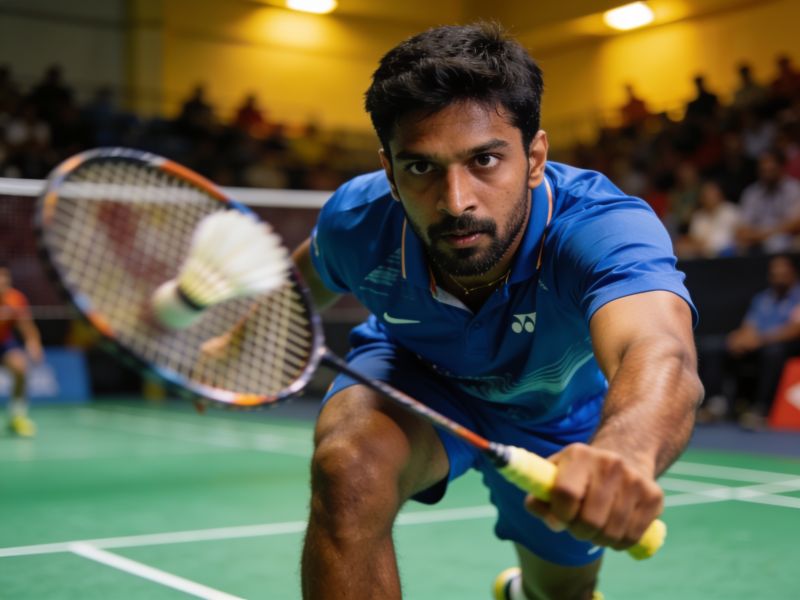
The Indian’s career has often been shaped by interruptions. Injuries。fitness concerns and inconsistent stretches kept Prannoy from enjoying the sustained recognition attached to his talent. He was already capable of defeating leading players when he won the Indonesia Masters in 2017, yet major titles did not arrive regularly. That gap created a strange impression: Prannoy looked dangerous enough to trouble anyone, but never secure enough to remain among the sport’s central names. His breakthrough with India’s Thomas Cup-winning team in 2022 changed that perception. Prannoy played a crucial supporting role throughout the campaign, taking responsibility in tense ties and helping India claim the country’s first Thomas Cup crown. Teammates spoke about his calm presence, while opponents learned that Prannoy could turn a slow start into a draining tactical battle.His style is not built around constant spectacle. Prannoy prefers to stretch a rally, test an opponent’s patience and wait for the moment when a defensive exchange becomes an attacking opening. That approach demands extraordinary physical control. A high lift that lands a few inches short。a late change of direction or a deceptive cross-court shot can alter the entire rhythm of a match. Prannoy has become particularly effective at reading an opponent’s movement before committing to a decisive strike. Against taller players, he often uses the net to force awkward lunges;against fast attackers, he slows the tempo and makes them hit one more shot. The method can look conservative from the stands, but it is rarely passive. Prannoy is constantly asking questions, and the answers usually require an opponent to spend energy.The 2023 World Championships reinforced his standing among the world’s elite. Prannoy reached the semifinals and secured a bronze medal, adding a major individual achievement to the team success of the previous year. His campaign included demanding victories over players capable of overwhelming him with pace, and each match carried the same familiar tension: Prannoy absorbing pressure。finding a narrow opening and refusing to give away easy points. He eventually lost to Viktor Axelsen, whose control and power remained too much in the decisive stages, but the result still marked an important milestone. Prannoy had reached a world championship podium at an age when many players are already being described as past their peak. That fact gave the medal a particular weight. It was not a sentimental farewell;
it was evidence that his game had matured rather than merely survived.Prannoy’s next challenge is less about proving that he belongs at the top and more about managing the cost of staying there. The international calendar is relentless, travel is demanding and the margins between victory and an early exit are tiny. A minor physical problem can turn a promising tournament into a week of recovery, while one difficult draw can erase months of ranking progress. Still, Prannoy brings something India’s younger players can study closely: the willingness to rebuild without theatrical reinvention. His career shows that progress may arrive late。unevenly and after several disappointments. In a sport increasingly driven by explosive movement, Prannoy’s measured intelligence offers a different kind of authority. Every time he returns to the court, Prannoy makes the same quiet argument—that longevity, when supported by discipline and tactical clarity, can be a competitive weapon in its own right.